What is Art? Exploring Skills, Originality, and the Artist's Unique Voice
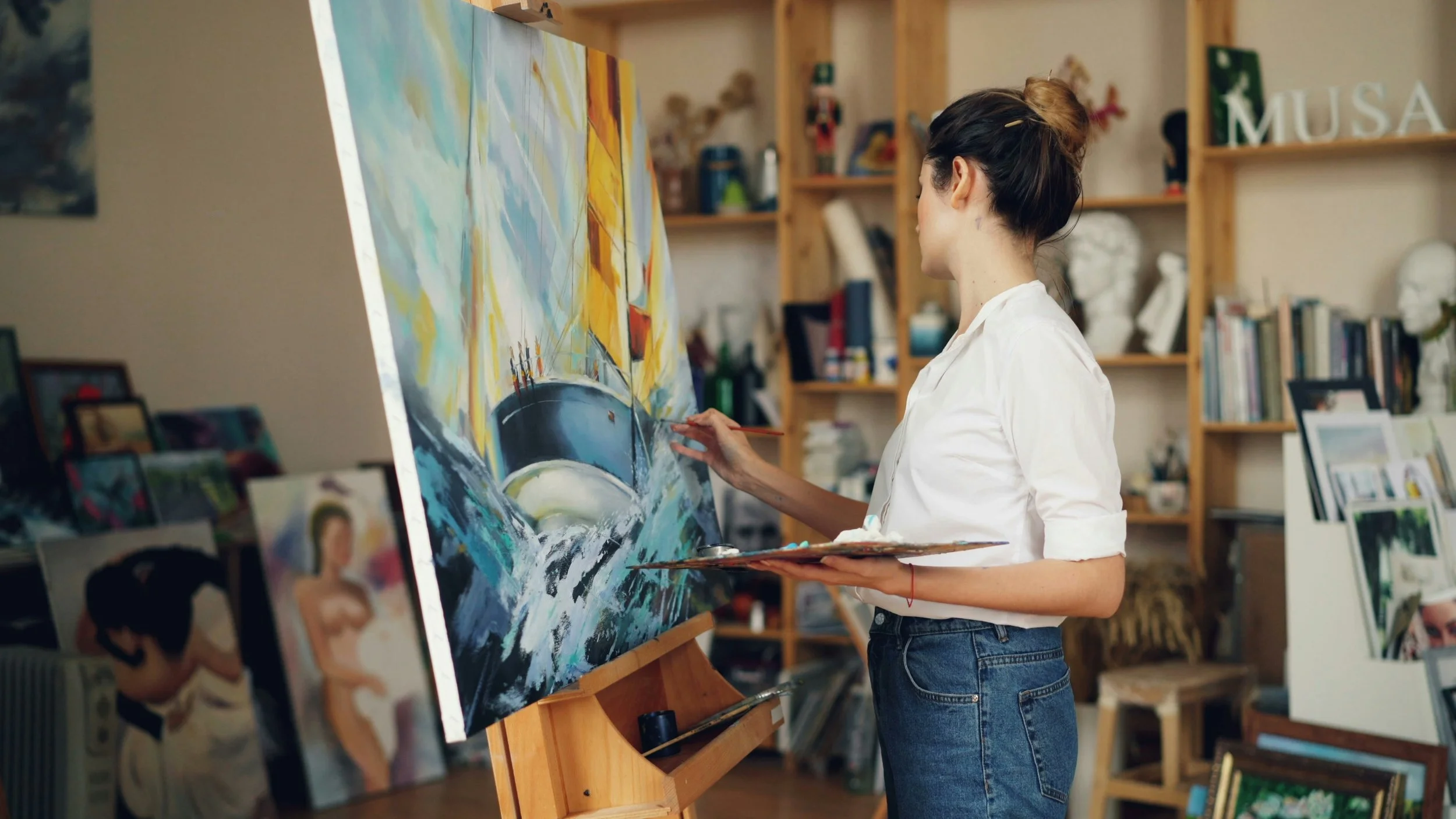
A thoughtful artist stands in a sunlit studio, brush in hand, working on her canvas—capturing that quiet moment when inner vision is expressed on the page. [Courtsey: Unsplash]
As I reflect on my own journey—returning to the studio after years immersed in oil painting, mosaics, virtual worlds, and now the fluid essence of watercolors—I often ponder the essence of art itself. It's more than a canvas or a sketch; it's a mirror to the human condition, a dialogue with our sense of place and the emotions that shape us.
In conversations about exhibits, critiques of fellow artists' work, and the quiet moments of creation, I've come to see art as a bridge between inner worlds and external expression. But what truly defines it? And how do we navigate the skills that elevate mere creation to something profound? Most importantly, why does an artist's individual voice—marked by originality and the intimate "handwriting" of their marks—matter so deeply? Let's explore these questions, drawing from established philosophical and artistic insights, while weaving in the threads of personal discovery.
What is Art?
Art, at its core, is a human-made artifact that embodies expression, representation, or form, often evoking beauty, emotion, or meaning. Philosophers have long debated this, with no universal agreement, but contemporary views often highlight its role in communicating ideas or experiences through skill and imagination.
As the Stanford Encyclopedia of Philosophy notes, definitions range from conventionalist (art as institutionally recognized) to aesthetic-focused (emphasizing properties like beauty or emotional power). Britannica echoes this, describing art as the study of interpretation, representation, and expression, distinct from natural objects like a sunset—beautiful, yet not crafted by human intent.
In my experience, art transcends mere decoration; it's an invitation to reflect on our shared humanity. Whether through the layered perspectives in my archived oils like "Promises Kept" or the emotional transitions in emerging watercolors, art captures life's complexities, much as the Internet Encyclopedia of Philosophy suggests: it's about spelling out necessary conditions for something to qualify as art, often involving aesthetic or appreciative intent.

An artist's hand guides a brush across vibrant, blending colors on canvas—each stroke transforming inner feeling into visible form, embodying art's essence as emotional expression and creative bridge. [ Courtesy: StockCake ]
Different Levels of Skills That Distinguish Artists
Artistic growth isn't linear; it's a progression of skills that build from basic mark-making to sophisticated expression. Viktor Lowenfeld's influential model outlines six stages of artistic development, primarily observed in children but applicable to artists at any age refining their craft.
These stages highlight how skills evolve from instinctive to intentional:
Scribble Stage (Ages 1-3, Beginner Exploration): Random marks foster motor skills and basic control. This entails discovering tools like pencils or brushes, building hand-eye coordination without intent for representation. It's the foundation where joy in creation begins. (Details)
Pre-Schematic Stage (Ages 3-4, Early Symbolism): Shapes connect to the world; skills involve basic form recognition and simple representation. Artists learn to see and replicate basic objects, developing observational awareness.
Schematic Stage (Ages 5-6, Structured Representation): Schemas emerge—consistent ways to depict people or scenes. Skills include proportion basics, spatial understanding, and intentional composition.
Dawning Realism (Ages 7-9, Intermediate Refinement): More realistic details; skills shift to accurate observation, shading for depth, and basic perspective. This stage demands practice in value, texture, and light.
Pseudo-Naturalistic (Ages 9-12, Advanced Technique): Critical self-awareness grows; skills encompass advanced anatomy, foreshortening, and emotional nuance through line quality.
Adolescent/Decision Stage (Ages 12+, Mastery and Voice): Personal style solidifies; skills integrate conceptual depth, innovation, and mastery of medium-specific techniques like glazing in oils or washes in watercolors. (Lowenfeld's framework expanded)
Beyond Lowenfeld, modern views like those from artist Kelli Folsom describe three broad levels:
Beginner (enthusiastic but directionless),
Intermediate (aware of gaps, building competence), and
Mastery (confident execution with personal flair).

A visual progression of artistic development—from joyful random scribbles to confident, detailed realism — illustrating how skill builds step by step, whether in childhood or in an adult returning to the easel. [Courtesy: ScienceDirect]
These skills—observational accuracy, technical proficiency, and conceptual integration—distinguish novices from masters, allowing deeper emotional and narrative expression.
To support this progression, every artist should strive to master the foundational elements of art—the building blocks of visual language—and the principles of art that organize them into cohesive, meaningful work.
The elements include:
line (a path created by a moving point, conveying direction, emotion, or structure),
shape (two-dimensional enclosed areas),
form (three-dimensional volume with depth),
color (hue, value, and intensity evoking mood),
value (lightness or darkness creating contrast and form),
texture (surface quality, real or implied), and
space (positive/negative areas suggesting depth or perspective).
These are widely recognized as the core components artists manipulate.
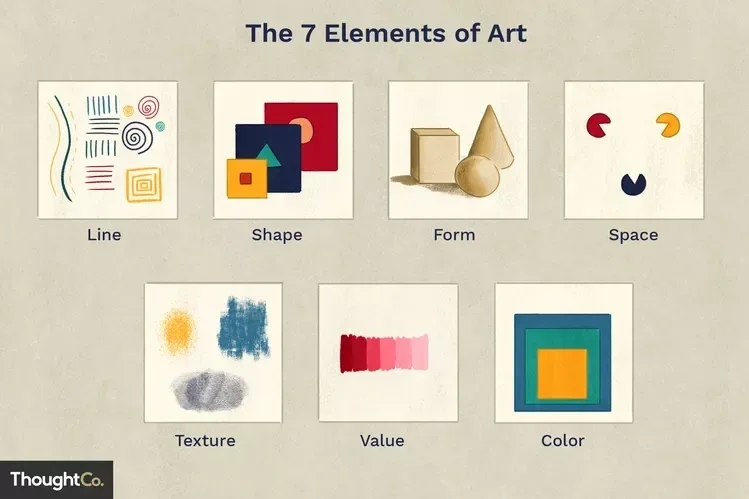
The seven essential building blocks every artist masters: line, shape, form, color, value, texture, and space—the visual vocabulary that turns intention into powerful expression. [Courtesy: ThoughtCo / Marina Li]
The principles guide how these elements are arranged:
balance (visual equilibrium), contrast (differences that create interest),
emphasis (focal point drawing attention),
movement (guiding the viewer's eye),
pattern (repetition for rhythm),
rhythm (organized flow through repetition),
unity (cohesive harmony), and
variety (diversity to avoid monotony).
Mastering these ensures a work feels intentional, harmonious, and expressive. (For a clear overview. )
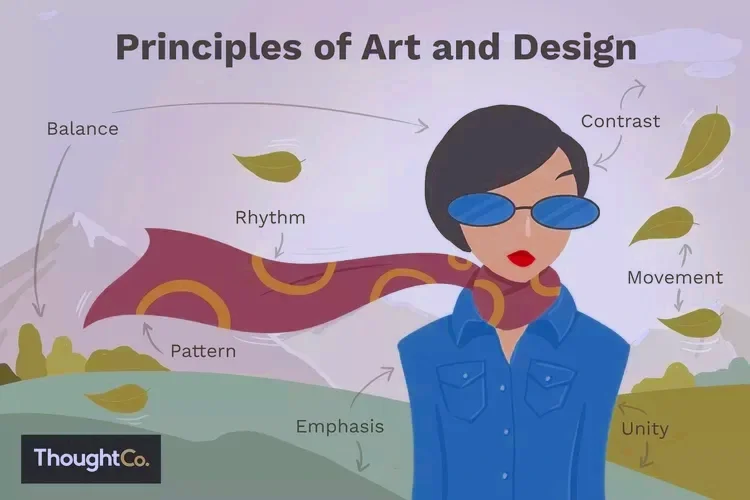
The organizing principles—balance, contrast, emphasis, movement, rhythm, unity, variety—that transform raw elements into harmonious, intentional compositions that draw the viewer in and hold them there. [Courtesy: ThoughtCo.]
The Importance of an Artist Having an Individual Voice
In a world saturated with images, an artist's individual voice is their anchor—a unique synthesis of originality, personal narrative, and mark-making that sets their work apart. Their work does not look like anyone else’s. Originality isn't about inventing from nothing; it's transforming influences into something unrepeatable, avoiding derivation where work merely echoes other’s work without adding fresh insight. As emphasized in discussions on art's value, originality brings impact, fostering trust and connection while preserving cultural heritage. ( More seen Here and Here.)
This voice emerges through authenticity: staying true to one's vision, as in my pivot from virtual simulations to watercolors capturing transition and connection. The Stanford Encyclopedia notes that originality in contemporary art involves heterogeneous expressions, not rigid formulas. Innovation balances tradition, pushing boundaries while honoring roots, ensuring art evolves. (More here. )
Central to this is mark-making—the artist's "handwriting," the distinct lines, textures, and gestures created with charcoal, pencil, pen, or brush. As Tate explains, mark-making conveys emotion, from loose gestures to controlled patterns, adding layers of meaning. It's the fingerprint of creativity, distinguishing one voice from another. Mark-making builds control, supports thought arrangement, and reveals intuition, as artist resources note. Without it, art feels generic; with it, your work becomes unmistakably yours, inviting viewers into your world.
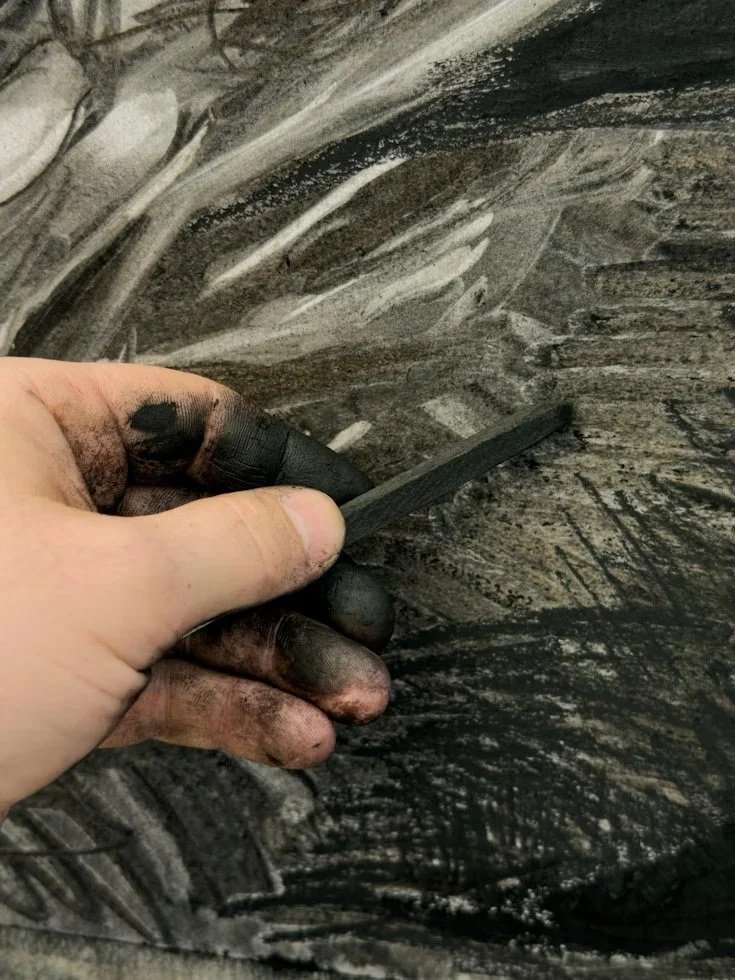
Charcoal-smudged hands, open and active, bearing the tangible evidence of mark-making—the intimate, unrepeatable “handwriting” that makes every artist’s touch unmistakably their own. [Courtesy: Unsplash]
In closing, art is our shared exploration of existence, elevated by skills that grow from scribbles to mastery, and anchored by a voice that's boldly original. As I continue my return to watercolors, I embrace this: true art isn't about fitting in, but standing out through the marks we dare to make.