From Psychology to Immersive Worlds: Crafting Spaces That Invite Exploration and My Return to Watercolor
As an artist rooted in both fine arts and psychology, I’ve always been drawn to one big question: How do visual spaces shape the way we feel and think?
My early paintings in oils and mixed media explored the human condition through color, form, and story. Later, my psychology studies—especially around perception, emotion, and how people connect to their surroundings—led me into designing 3D immersive virtual worlds. These were digital environments where avatars (digital versions of real people) could walk, interact, and learn.
In those virtual spaces, I combined artistic instincts with psychological ideas to create places that felt welcoming, engaging, and meaningful.
What Makes a Virtual World Feel "Real" and Inviting?
I drew from Mihaly Csikszentmihalyi’s concept of flow—that sweet spot where you’re fully absorbed in an activity, losing track of time. To help users reach flow, I designed intuitive paths, balanced lighting, and gentle visual cues that encouraged exploration without overwhelming anyone.

Avatar in Second Life [Public Domain courtesy of WikiMedia Commons]
The goal? Make the space feel human-centered so people wanted to stay longer. Research shows that well-designed environments improve learning and retention—users explore more, reflect deeper, and remember better.
I translated classic 2D art principles into 3D:
Composition and focus became spatial layouts that guide the eye (or avatar).
Value and color harmony turned into dynamic lighting and textures.
Chiaroscuro (the dramatic play of light and shadow, like in Renaissance paintings) helped draw attention to key areas, such as learning hubs.
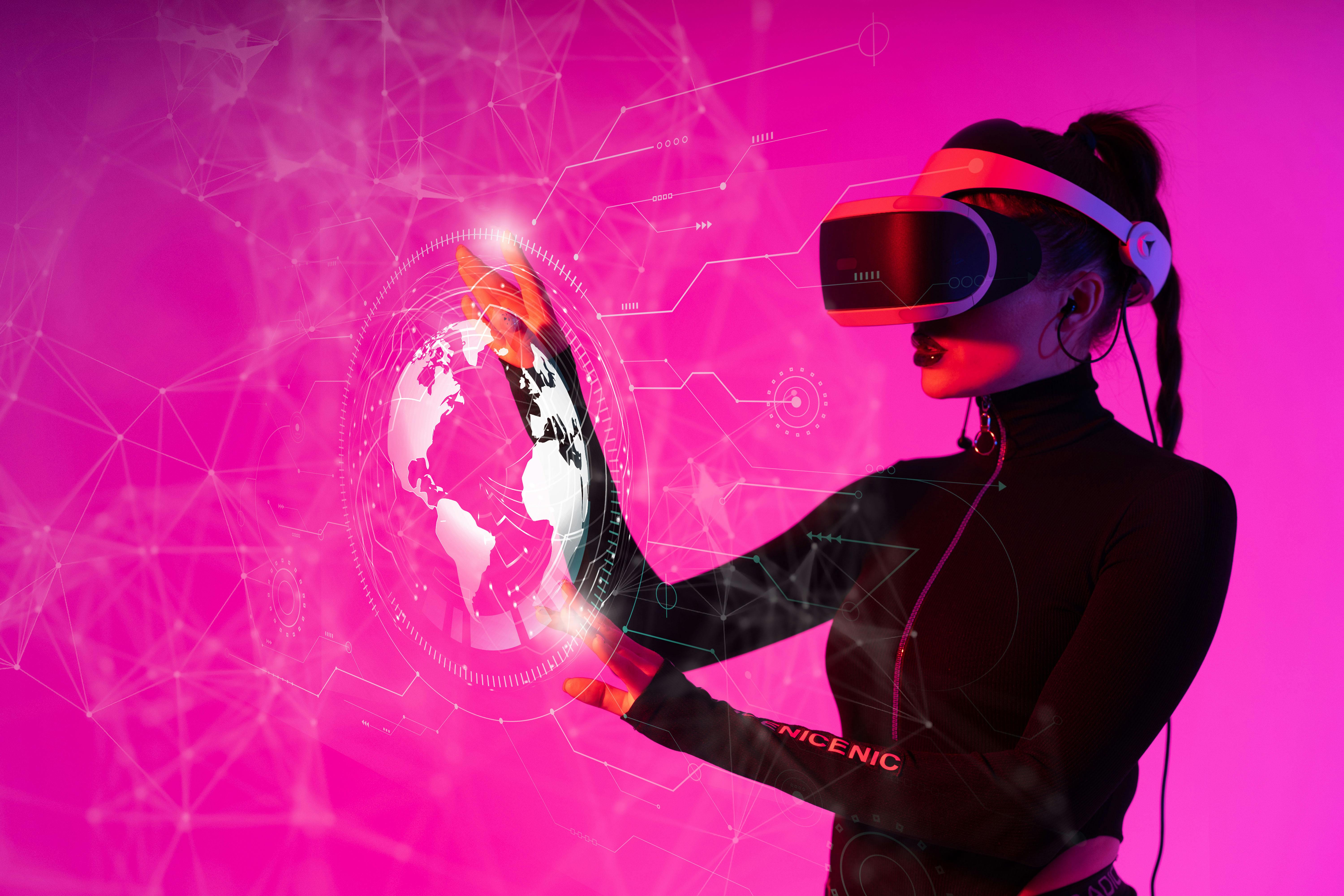
Woman wearing Virtual Reality goggles [Public Domain courtesy of Pexels]
Sound mattered too. Gentle waves, rustling leaves, or soft birdsong created calm and countered any sense of unease.
One common pitfall is the Uncanny Valley—when something looks almost right but feels strangely "off," triggering discomfort or even dread. Harsh lighting, unnatural colors, or jarring audio can push people away.
By choosing soothing, natural elements, I helped virtual worlds feel alive and safe, inviting deeper immersion.

Soothing waterfall sounds in a lush forest. [Public Domain courtesy of Freerangestock]
The Heart of It: Sense of Place
At the core of my work is sense of place—that powerful, often subconscious bond we form with an environment. It’s shaped by sights, sounds, memories, and emotions. Think of the quiet comfort of a favorite childhood spot or the awe of a misty mountain view.
In virtual worlds, I used real-time feedback (spaces that subtly change based on user actions) to strengthen this bond, making digital places feel as personal and meaningful as real ones.
This same idea echoes in traditional art. Masters like J.M.W. Turner and Thomas Moran captured sense of place through glowing light and atmospheric haze. Winslow Homer did it with vivid, emotional scenes—like a narrow street in Cuba that feels alive with heat and history.

Winslow Homer depicting a narrow street in Santiago de Cuba [Public Domain courtesy of Wikimedia]
Bringing It All Back to Watercolor
After 25 years away, I’ve returned to watercolor—and it feels like a natural next step.
Watercolor’s transparency and fluidity mirror the immersive, adaptive qualities I loved in virtual design. Layers build slowly, edges soften, colors blend unpredictably—just like life and memory.
Now, inspired by John Singer Sargent and Winslow Homer, I’m applying those same psychological principles on a quieter canvas:
Compositions that gently pull the viewer in.
Washes that evoke mood and reflection.
Techniques that stir emotion without forcing it.
It’s a smaller scale, but the invitation to explore and connect remains the same.
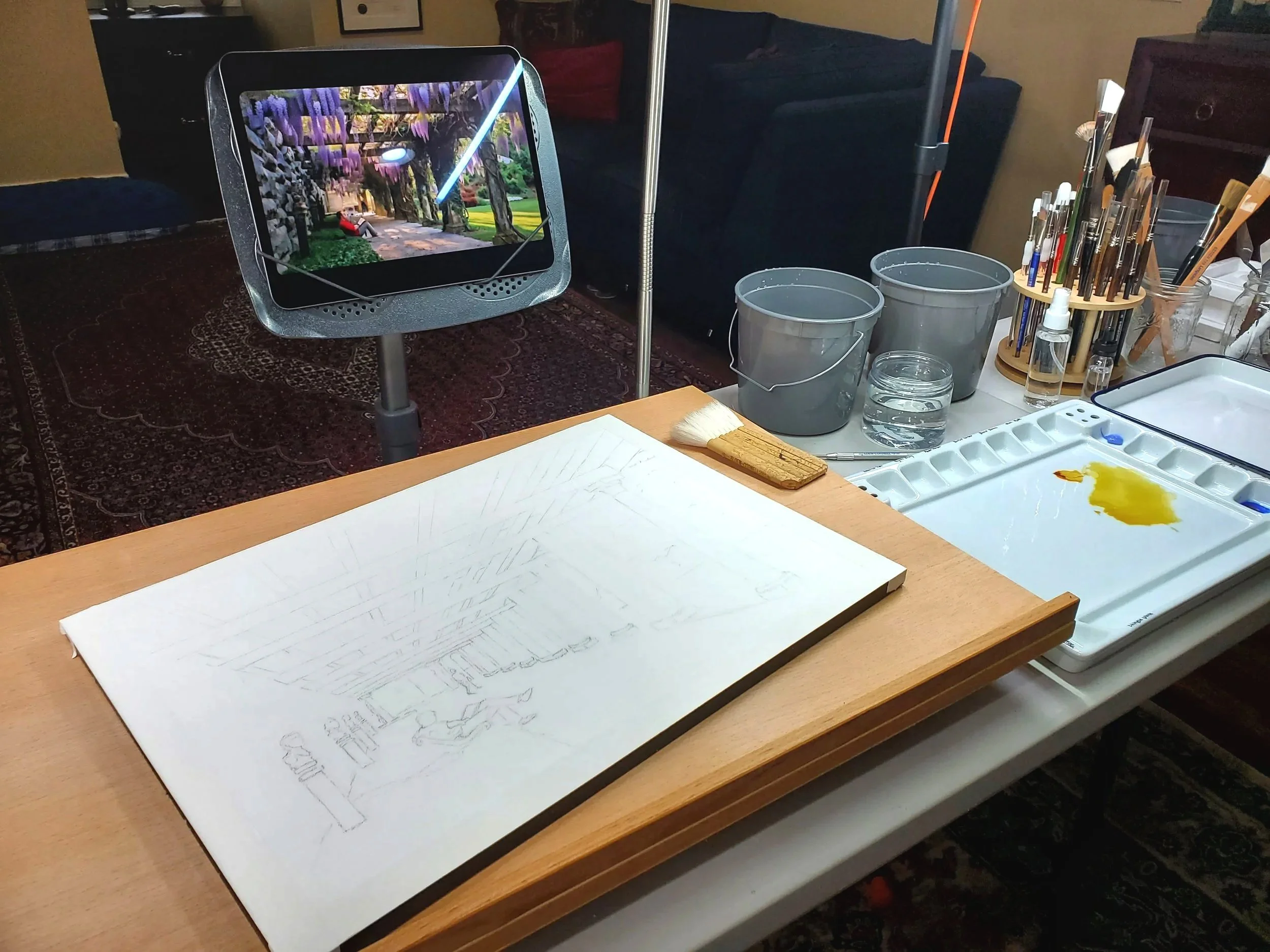
Back in my studio
Looking Ahead
This journey—from psychology studies to virtual worlds to watercolor—has always been about one thing: helping people feel more deeply connected to the spaces (real or imagined) around them.
I’m excited to share more as I rediscover the medium and bring these layers together in new paintings.
Thank you for joining me on this path. How does sense of place show up in your own life or art?