Sense of Place in Watercolor: Historical Perspectives and a Fresh Lens
As I immerse myself back into the world of watercolor, I'm continually struck by how this medium has long served as a vessel for capturing "sense of place"—that intangible bond between people and their environments.
For centuries, artists have used watercolor's fluidity and transparency to evoke not just the physicality of a location, but its emotional resonance, cultural echoes, and atmospheric soul.
In this post, I'll explore this timeless theme through the works of a few historic watercolor masters, examining how they conveyed it and the inherent challenges. Then, I'll touch on the unique twist I'm bringing to it in my own practice, drawing from my background in psychology and complex adaptive systems.
J.M.W. Turner

J. M. W. Turner - The Red Rigi (1842) _watercolor [Public domain. Courtesy of Wikimedia Commons]

JMW Turner, The Sarner See (Lake Sarnen), Evening c.1842, watercolor. 1842 [Public domain. Courtesy of Wikimedia Commons]
One of the most iconic figures in this realm is J.M.W. Turner, whose watercolors masterfully blend
light,
color, and
form
to transcend mere representation. In pieces like his Swiss lake scenes, such as “The Sarner See (Lake Sarnen), Evening”, Turner wasn't just painting a spot on the map; he was distilling the "spirit of a place," using loose washes and dramatic lighting to evoke the ephemeral mood of alpine landscapes.
His approach often involved compressing or expanding elements of the scene, prioritizing emotional impact over topographic accuracy—challenges like capturing fleeting atmospheric effects demanded quick, intuitive brushwork that watercolor excels at.
Turner's works remind us how places can feel alive, almost breathing, through the interplay of sky, water, and terrain.
Thomas Moran

Thomas Moran, Mountain of the Holy Cross, 1890. Watercolor [Public domain. Courtesy of Wikimedia Commons]

'The Rock of Acoma, New Mexico' by Thomas Moran, 1902, watercolor [Public domain. Courtesy of Wikimedia Commons]
Across the Atlantic, Thomas Moran channeled a similar ethos in his depictions of the American West. His watercolors from expeditions to Yellowstone and the Grand Canyon, such as those featuring towering canyons and vibrant geysers, go beyond documentation to capture the geological and botanical essence of these wild frontiers.
Moran's technique—painterly strokes that articulate forms without rigid detail—allowed him to convey a timeless "spirit of place," emphasizing the raw power and isolation of these landscapes. The challenge here was immense: rendering vast scales and dynamic natural forces in a medium prone to unpredictability, yet his efforts not only celebrated these sites but helped advocate for their preservation as national parks.
Winslow Homer
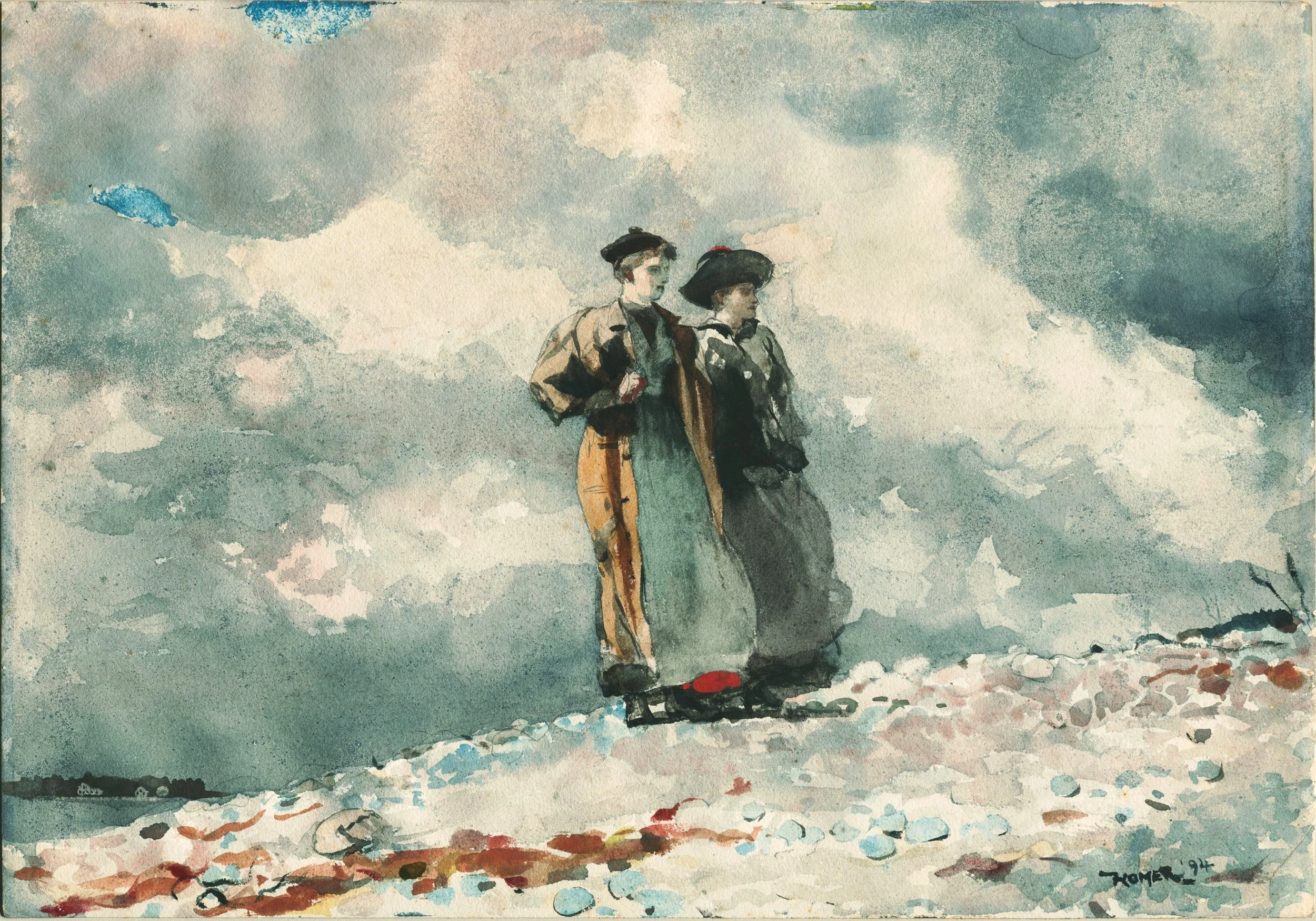
Winslow Homer - The Outlook, Maine Coast. watercolor. 1894 [Public domain. Courtesy of Wikimedia Commons]
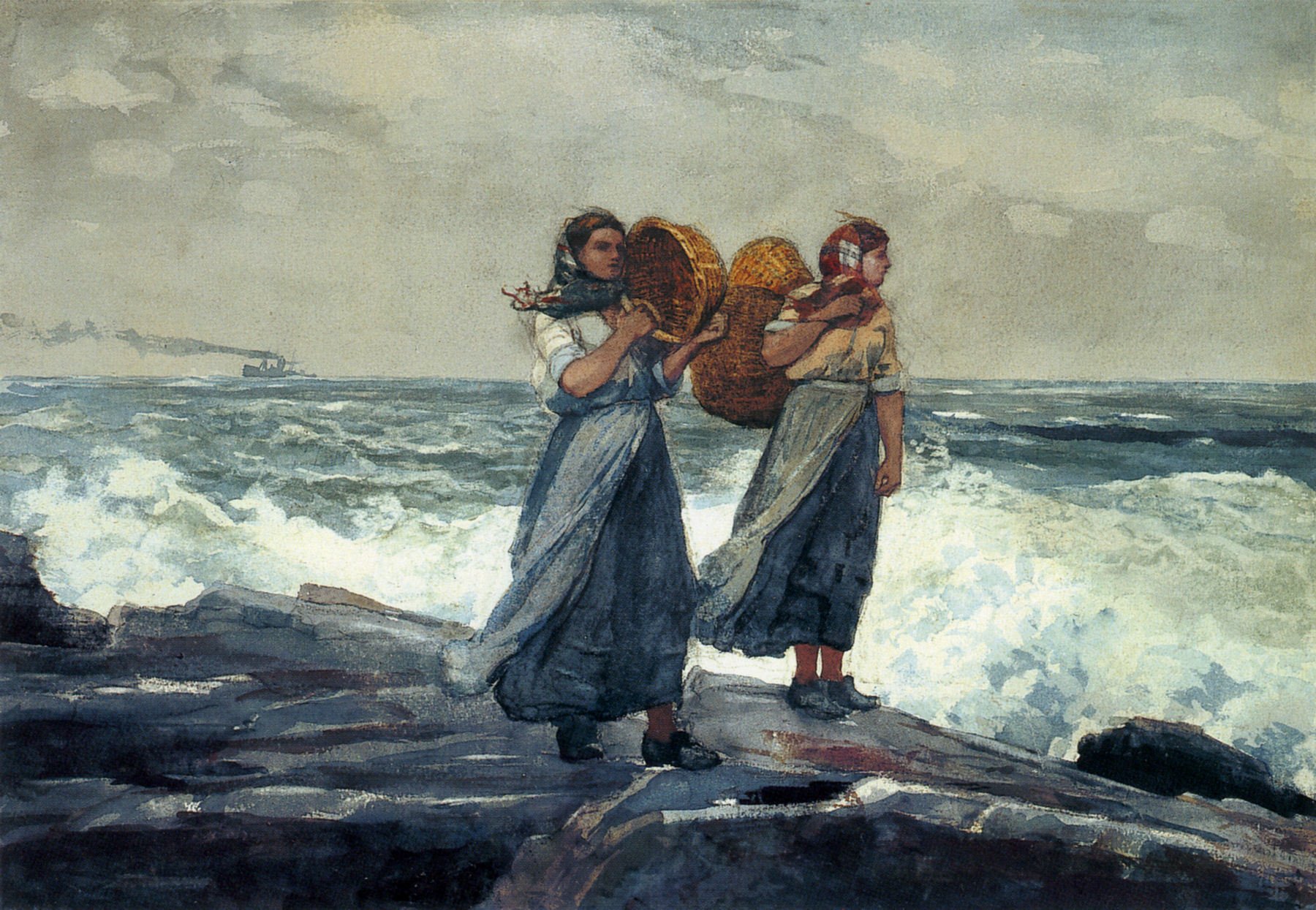
Winslow Homer - A Fresh Breeze (c.1881). watercolor [Public domain. Courtesy of Wikimedia Commons]
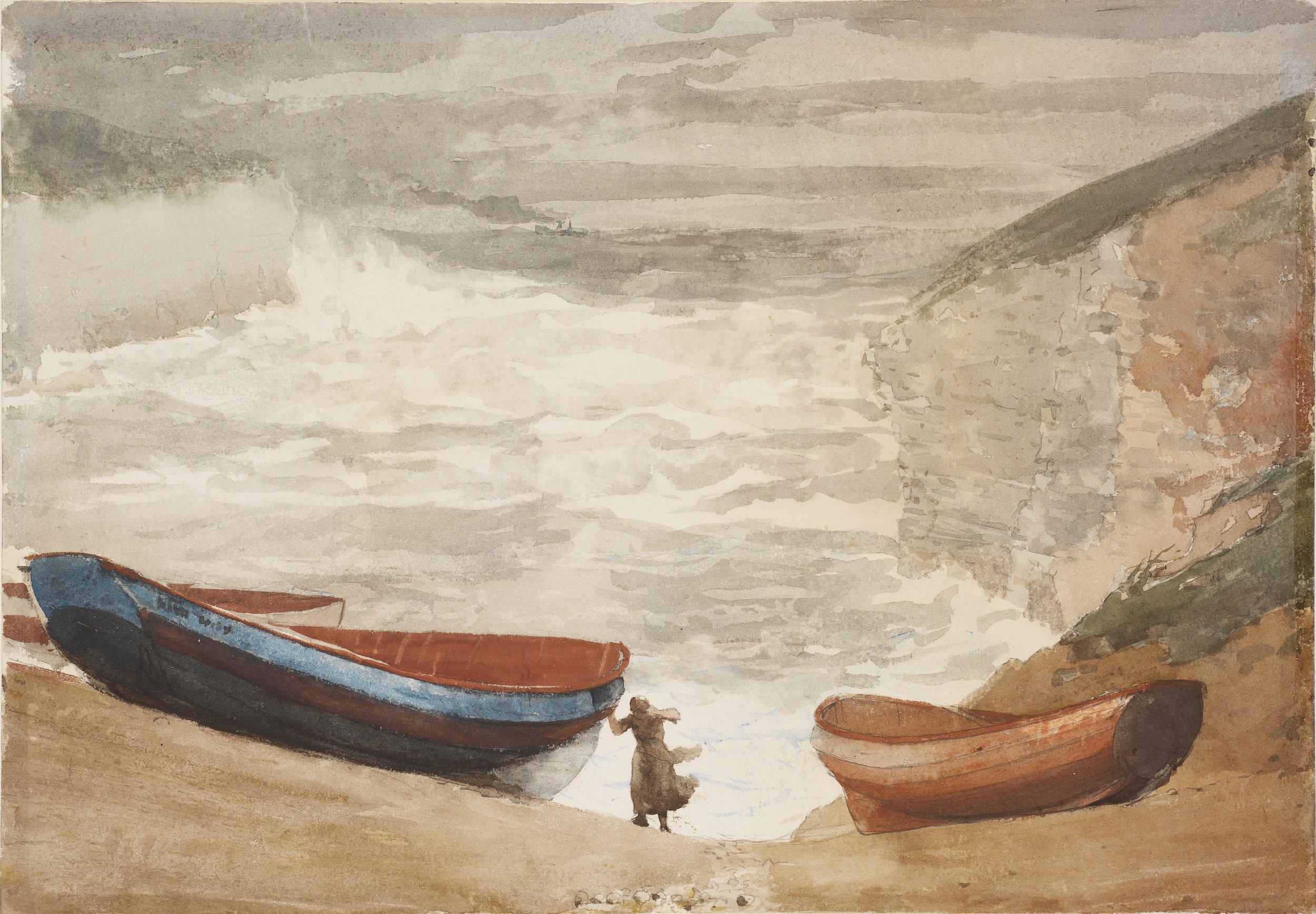
Winslow Homer - English Coastal Scene (1878). watercolor [Public domain. Courtesy of Wikimedia Commons]
Winslow Homer, another American trailblazer, brought a visceral, sensory dimension to sense of place in his coastal watercolors. In works like The Outlook, Maine Coast, he associated visual elements with tangible feelings—the sting of sea spray, the chill of overcast skies, or the force of ocean winds—creating immersive scenes that make viewers feel present in the rugged New England wilderness.
Homer's approach relied on watercolor's ability to suggest movement and texture through wet-on-wet blending and bold contrasts, tackling challenges like evoking weather's transience without overworking the paper. His paintings often highlight humanity's humble role amid nature's dominance, a narrative that resonates deeply with our environmental connections.
John Singer Sargent

John Singer Sargent - Santa Maria della Salute, Venice, FCG. (1909). watercolor [Public domain. Courtesy of Wikimedia Commons]
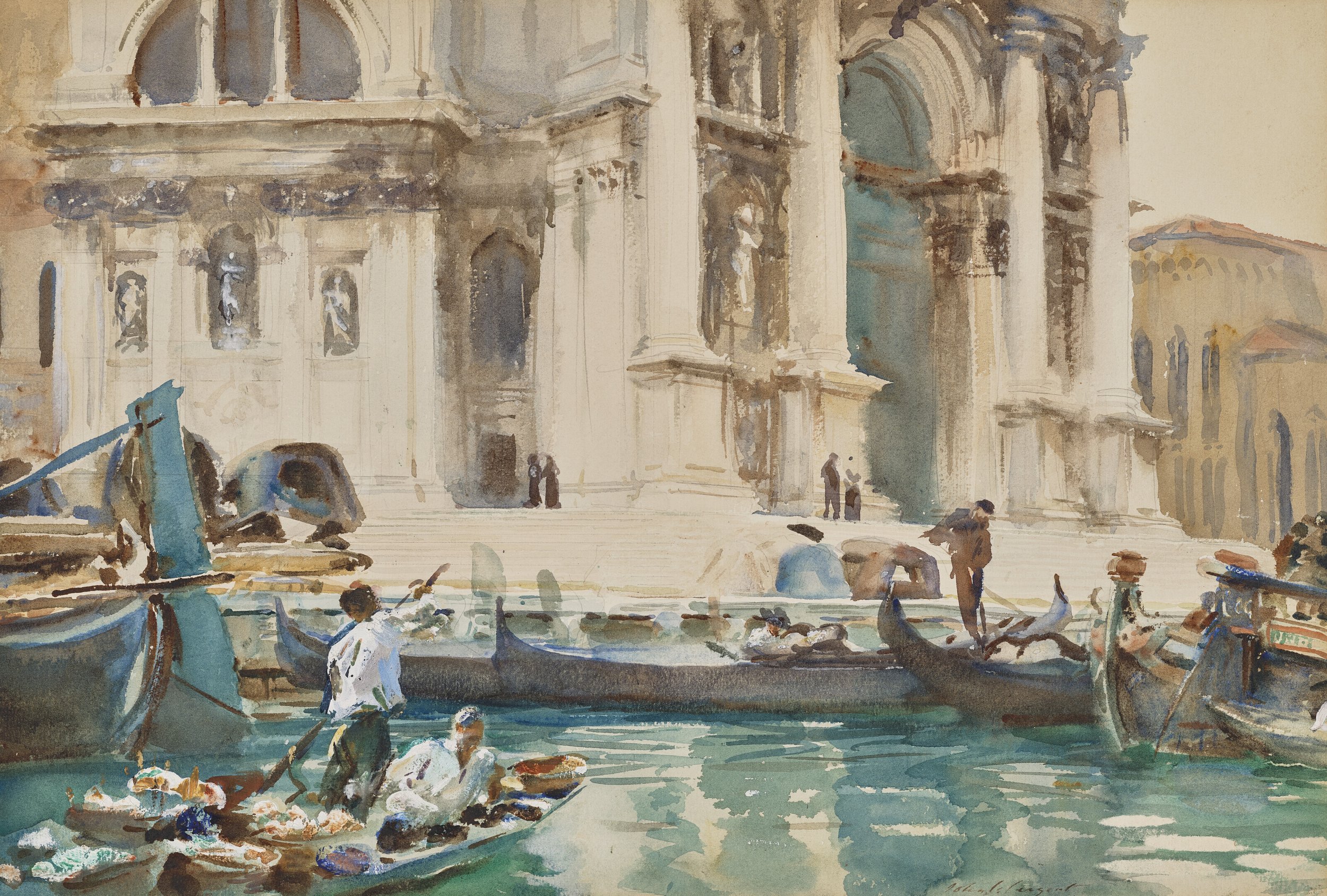
JOHN SINGER SARGENT (1856-1925) The Façade of La Salute, Venice. watercolor [Public domain. Courtesy of Wikimedia Commons]
John Singer Sargent, with his travel-inspired watercolors, added a cosmopolitan flair. His Venetian scenes, such as Santa Maria della Salute, use rapid, gestural brushwork and vibrant hues to capture the shimmering canals and architectural grandeur, infusing places with a sense of immediacy and light. Sargent's technique—drawing directly with the brush in flat washes juxtaposed with intricate details—addressed the challenge of portraying bustling, historic locales while preserving their poetic allure.
These works feel like snapshots of wanderlust, where place becomes a character in its own right.
Challenges
These artists shared a common thread: using watercolor's inherent challenges—
its unforgiving nature,
the need for spontaneity, and
the balance of control versus flow
—to craft narratives about humans' place in the world.
Yet, as I embark on this new chapter, I'm approaching sense of place through a lens informed by psychology and complex adaptive systems. I see it as an iterative feedback loop: how environments shape human behavior, emotions, and societies, and how we, in turn, reshape those spaces—from ancient migrations to modern virtual worlds. This perspective adds layers of interconnections, viewing places not just as backdrops but as dynamic systems influencing the human condition.
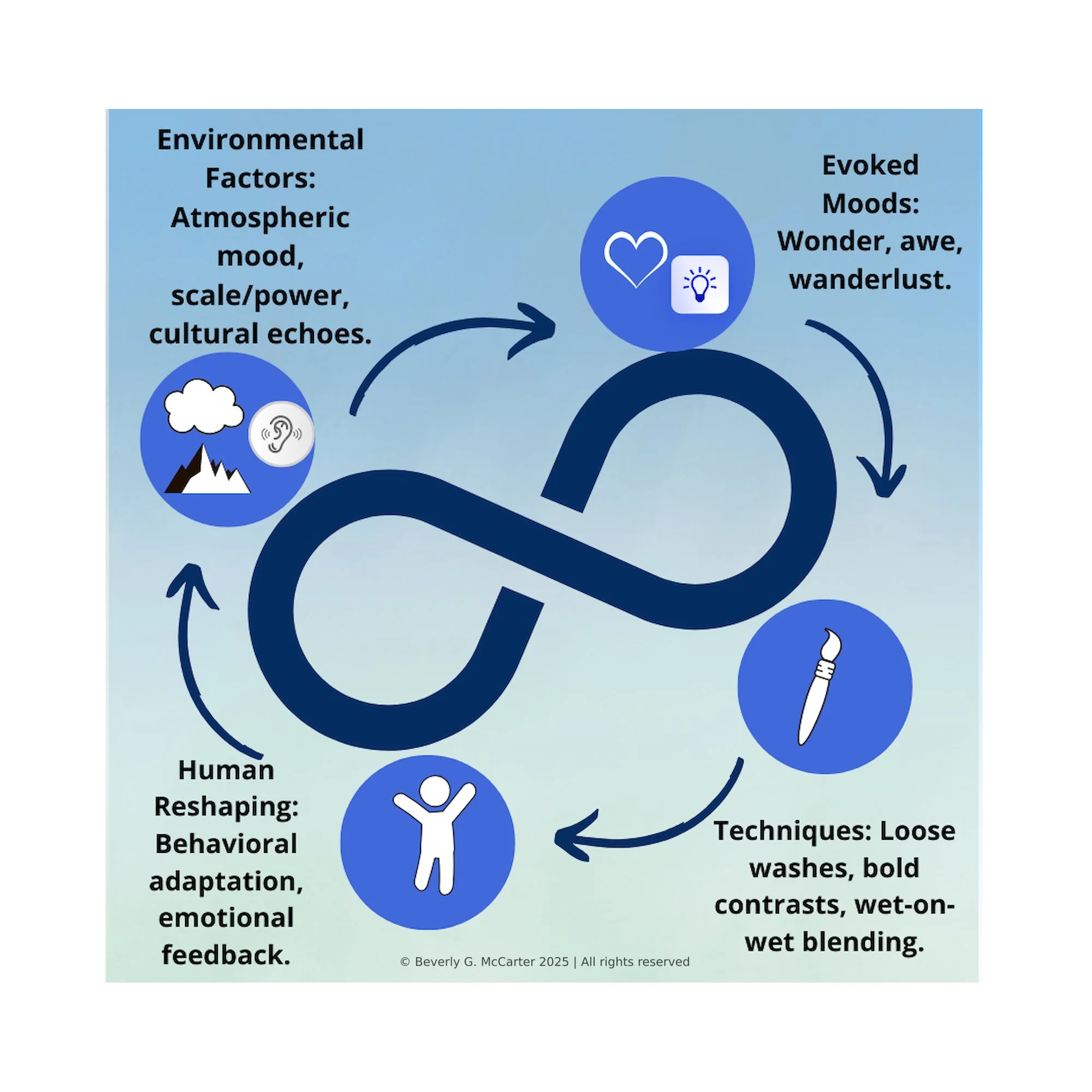
Visualizing the Feedback Loop: How environmental cues inspire emotional responses, artistic expression, and adaptive behaviors in capturing 'sense of place' through watercolor.
In future posts, I'll dive deeper into specific aspects of this theme, perhaps exploring urban versus natural senses of place or the role of memory. For now, reflecting on these historic voices inspires me to experiment with watercolor's potential to weave these complex stories.
What places evoke a profound sense for you?